 blog
Roof Replacement in Daphne: A Homeowner's Guide
Table of Contents
- Why Residential Roof Replacement Matters in Daphne
- Understanding Roof Replacement Cost in Your Area
- Getting an Accurate Roof Replacement Estimate
- Roof Replacement Timeline: What to Expect
- Choosing the Right Roof Replacement Contractor
- Materials and Weather Considerations for Coastal Homes
- Insurance, Permits, and FORTIFIED Standards
- Frequently Asked Questions
Last Updated: October 11, 2026
Why Residential Roof Replacement Matters in Daphne
A damaged roof compromises your home's structural integrity and exposes you to water damage, mold, and costly repairs. In coastal Alabama communities like Daphne, where storms bring high winds and heavy rainfall, roof replacement Daphne isn't just maintenance, it's essential protection for your investment.
The decision to replace your roof typically comes after an inspection reveals severe damage, multiple leaks, or age-related deterioration. Many homeowners delay this decision because they underestimate the cost or aren't sure what to expect. Understanding the process, timeline, and contractor selection criteria helps you move forward with confidence.
This guide walks you through everything you need to know about residential roof replacement in your area.
Understanding Roof Replacement Cost in Your Area
Roof replacement costs depend on several factors: your roof's square footage, the materials you choose, the complexity of your home's design, and local labor rates. Coastal homes often face higher replacement costs because materials and installation techniques must withstand salt air, humidity, and storm-force winds.
Typical Cost Ranges and Drivers
Roof replacement costs depend on several factors, including the scope of the project, the size and design of your home, and the materials chosen.
Key cost drivers include:
- Roof size and pitch: A 2,000-square-foot roof costs more to replace than a 1,500-square-foot roof. Steeper pitches require more safety equipment and labor time.
- Material selection: Asphalt shingles are a common option. Impact-resistant shingles rated for high-wind areas offer enhanced durability. Metal roofing is another choice, known for its longevity compared to asphalt.
- Structural repairs: If inspection reveals rotted decking, damaged trusses, or inadequate ventilation, repair costs may be added.
- Permit and inspection fees: Local building permits are typically required for all residential replacements.
- Removal and disposal: Tearing off the old roof and hauling debris is part of the process; some contractors include this in labor, others charge separately.
- Flashing and penetrations: Chimneys, skylights, vents, and valleys require careful flashing to prevent leaks. Complex designs increase material and labor costs.
Why Coastal Homes Cost More
Salt air accelerates corrosion of metal fasteners and flashing, so coastal installations often use stainless steel or coated hardware at a premium. High-wind building codes in coastal areas may require additional fastening patterns, hurricane straps, or reinforced decking, all adding labor and material costs. Humidity and salt exposure also shorten the lifespan of standard asphalt shingles, making impact-resistant or metal options more cost-effective over time despite higher upfront investment.
Getting Transparent Estimates
A complete residential roof replacement typically involves removing the old roof, inspecting the underlying structure, repairing any damage, and installing new materials. Rather than guessing at a price range, get multiple estimates from licensed contractors in your area. Each estimate should itemize materials (brand, grade, and quantity), labor (broken down by phase), permits, disposal, and any structural repairs discovered during inspection. This transparency helps you compare apples to apples and avoid surprises. Request that contractors specify whether removal, permits, and cleanup are included or charged separately, this detail often accounts for thousands of dollars in difference between bids.
Getting an Accurate Roof Replacement Estimate
A professional estimate begins with a thorough roof inspection. The contractor should climb onto your roof, examine the current condition, check for leaks or structural damage, and assess how much work lies beneath the surface.
What Inspectors Look For
During a roof inspection, contractors evaluate the condition of shingles or metal panels, the integrity of the underlying decking, flashing around chimneys and vents, and signs of water penetration or rot. They also check for proper ventilation and insulation, which affect how long your new roof will last.
A detailed inspection report becomes your roadmap. It identifies what must be replaced, what can be repaired, and what materials will perform best for your climate. This information feeds directly into your estimate.
Comparing Estimates From Multiple Contractors
Request estimates from at least three licensed contractors. Each should provide the same level of detail: materials specified by brand and grade, labor costs broken down by phase, permit fees, and warranty information.
Pay attention to what's included and excluded. One contractor might include roof removal and disposal; another might charge separately. One might offer a ten-year workmanship warranty; another might offer twenty-five years. These differences matter when you're comparing true value.
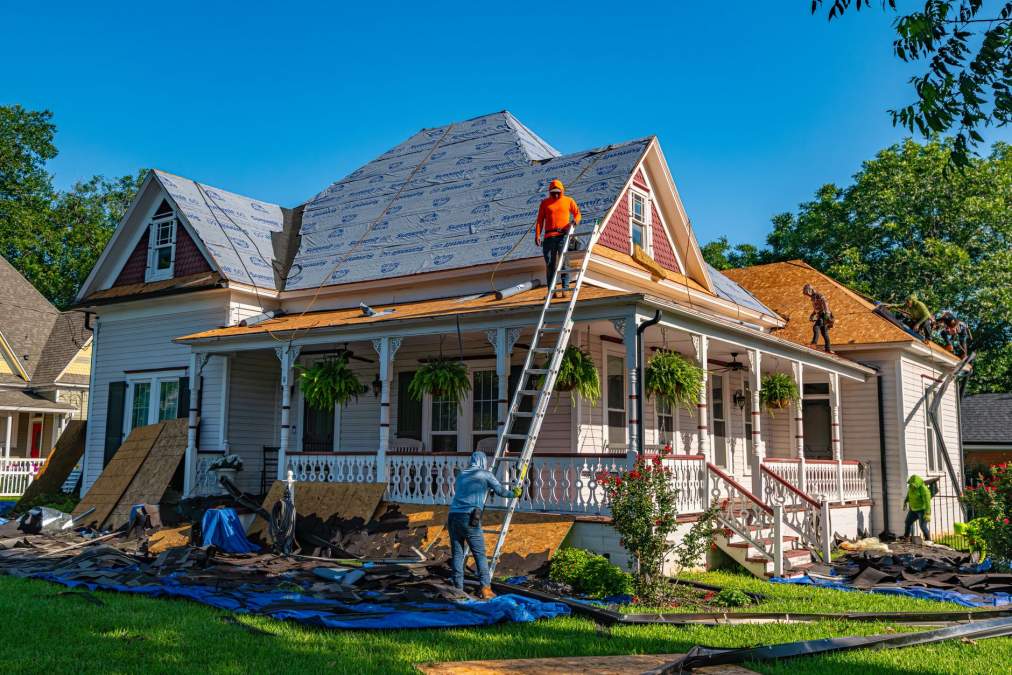
Licensed roofing contractor in safety gear conducting residential roof inspection on sloped residential home with inspection tools visible, homeowner standing below watching the process
Roof Replacement Timeline: What to Expect
A typical residential roof replacement takes three to seven days, depending on roof size, weather, and complexity. Smaller homes with simple roof designs finish faster. Larger homes, multiple roof planes, or structural repairs discovered during removal extend the timeline.
Weather delays happen. High winds, rain, or extreme heat can pause work and push your completion date back. Plan for flexibility and discuss weather contingencies with your contractor before work begins.
Choosing the Right Roof Replacement Contractor
The contractor you hire shapes your entire experience, from design consultation through final walkthrough. The right contractor communicates clearly, respects your timeline and budget, and delivers quality workmanship that lasts.
Contractor Vetting Checklist
Before hiring, verify these essentials:
- Licensed by the State of Alabama and in good standing
- Carries general liability
- Provides references from recent residential roof replacement projects
- Offers a detailed estimate
- Explains warranty coverage in writing (materials and workmanship)
- Discusses permit requirements and who handles applications
- Willing to work with your insurance company on storm damage claims
- Available for your project timeline without long delays
- Responds promptly to calls and emails
- Provides a signed contract before work begins
A contractor who checks all these boxes demonstrates professionalism and accountability. One who rushes through the vetting process or avoids transparency is a red flag.
Why Integrated Design and Build Matters
When your contractor also handles design consultation, you avoid the frustration of coordinating between separate designers and builders. One team owns the entire project, from material selection through final inspection. This integration reduces miscommunication, speeds decision-making, and ensures your vision translates accurately into finished work.
Duralast Design Build brings integrated design and construction expertise to every roof replacement Daphne project. We handle material selection, structural assessment, permit coordination, and installation, all under one roof, so to speak. This approach gives you a single point of contact and eliminates the gaps that often occur when homeowners manage multiple contractors themselves.
Materials and Weather Considerations for Coastal Homes
Coastal Alabama homes face unique environmental pressures: salt air corrodes some materials, high humidity accelerates decay, and storm-force winds demand impact-resistant designs. Your material choice directly affects how long your roof will perform, your maintenance burden, and your insurance costs. Understanding the trade-offs helps you select the best option for your climate and budget.
Asphalt Shingles: Affordability vs. Coastal Durability
Asphalt shingles remain the most common choice for residential roofs and offer the lowest upfront cost. Standard three-tab or architectural shingles are common choices. However, coastal conditions shorten their lifespan significantly. Salt spray corrodes the granule coating and underlying asphalt, and high humidity promotes algae and moss growth. A shingle rated for ideal conditions may have a reduced lifespan on the coast.
Impact-resistant shingles (rated for high-wind and hail areas) perform well in coastal environments. These shingles use reinforced fiberglass mats and adhesive technology to resist tearing and granule loss. They may also qualify for homeowner's insurance discounts, potentially offsetting the premium over time. If your home is in a high-wind zone or has experienced storm damage, impact-resistant shingles are a valuable investment.
Metal Roofing: Durability and Long-Term Value
Metal roofing excels in coastal climates. Standing-seam metal panels resist salt corrosion better than asphalt, shed water and salt spray efficiently, and withstand winds exceeding 140 mph. Metal roofs last 40-70 years, two to three times longer than asphalt, and require minimal maintenance beyond occasional inspection.
Metal roofing can be a significant upfront investment. However, its extended lifespan, reduced maintenance, and potential insurance discounts can improve long-term value. Many homeowners find the premium is recouped through lower insurance premiums and avoided replacement cycles. Metal also reflects solar heat, which can contribute to reducing cooling costs in summer.
Specify aluminum or copper-alloy metal roofing for coastal installations; galvanized steel corrodes faster in salt air. Ensure the contractor uses stainless steel fasteners and flashing to prevent rust.
Flat Roofs: Specialized Considerations
Flat roofs (common on modern or contemporary homes) require careful design and maintenance in coastal climates. Flat roofs are prone to ponding, water pooling in low spots, which accelerates deterioration and leaks. High humidity and salt air also stress flat-roof membranes.
If your home has a flat roof, ensure the contractor specifies a high-quality membrane system (TPO, EPDM, or PVC) with proper slope for drainage and adequate ventilation. Flat roofs require careful design and maintenance in coastal climates. They also require annual inspections and maintenance to prevent costly leaks. Budget for regular cleaning and debris removal, especially after storms.
Warranty and Performance Expectations
Discuss material longevity with your contractor and verify warranty coverage. Manufacturer warranties typically cover material defects for 20-50 years (depending on product and grade) but often exclude damage from salt exposure, improper installation, or inadequate maintenance (Resources). Workmanship warranties (covering installation quality) typically run 10-25 years and vary by contractor.
Ask your contractor to specify:
- Material warranty: Length, coverage details, and any exclusions related to coastal conditions.
- Workmanship warranty: Length and what it covers (e.g., leaks due to installation defects).
- Maintenance requirements: What you must do to keep the warranty valid (e.g., annual inspections, gutter cleaning).
Understanding realistic performance helps you plan for future maintenance and replacement cycles. A premium metal roof with a 50-year warranty may require less intervention than a budget asphalt roof with a 15-year warranty, making it the smarter long-term choice despite higher upfront cost.
Insurance, Permits, and FORTIFIED Standards
Most roof replacements require permits from your local building department. Your contractor should handle permit applications and coordinate inspections. Permits ensure work meets current building codes and protects your home's safety and resale value.
If your roof replacement follows storm damage, your homeowner's insurance may cover part or all of the cost. Your contractor should understand the claims process and be willing to work with your adjuster. Some contractors specialize in insurance claims and can guide you through documentation and approval.
FORTIFIED standards represent a voluntary construction program that strengthens homes against wind and hail damage. Meeting FORTIFIED standards during roof replacement can reduce your insurance premiums and improve your home's resilience. Ask your contractor whether your project qualifies and what upgrades would achieve certification.
Roof replacement protects your home's structure and your family's safety. Finding the right contractor, one who listens to your needs, explains the process clearly, and delivers quality work, makes all the difference. Duralast Design Build provides expert guidance, transparent estimates, and integrated design-and-build service that eliminates the guesswork. Schedule a consultation with our team to discuss your roof replacement project and get a detailed estimate tailored to your home and budget.
Frequently Asked Questions
How long does a residential roof replacement take?
The timeline for residential roof replacements varies depending on the roof size, weather, and material complexity. Your contractor should provide a specific timeline during the estimate phase. Weather delays and permit requirements can add time, so plan accordingly and confirm the schedule before work begins.
What should I look for in a roof replacement estimate?
A solid roof replacement estimate breaks down labor, materials, permits, and disposal costs separately. It should specify the roofing material, pitch, square footage, and warranty details. Compare at least three estimates from licensed contractors. Watch for vague pricing, missing warranty information, or unusually low bids—these often signal corner-cutting. Verify the contractor is licensed, bonded, and insured before signing.
What roofing materials work best for homes in Daphne?
Daphne's coastal climate demands durable materials that resist salt spray, high winds, and moisture. Asphalt shingles rated for coastal conditions, metal roofing, and architectural shingles are popular choices. Metal roofs offer superior wind resistance and longevity, while quality shingles provide a traditional look at lower cost. Ask your contractor which materials meet FORTIFIED standards and local building codes. Material choice affects both cost and replacement timeline.
Does homeowners insurance cover roof replacement?
Insurance coverage depends on the cause of damage and your policy. Storm damage, wind, and hail are typically covered, but wear-and-tear or age-related deterioration are not. File a claim promptly after damage occurs and get a contractor's estimate. Many insurers require you to use licensed contractors. Review your policy details and contact your agent to understand your coverage limits and deductibles before scheduling replacement work.