 Listicle
Benefits of Integrated Design and Build Services
Table of Contents
- 1. One Team, One Contract: The Single Point of Responsibility
- 2. Design-Build vs. Design-Bid-Build: What's the Difference?
- 3. How the Design-Build Process for Homeowners Actually Works
- 4. Faster Project Delivery: How the Design-Build Project Timeline Works
- 5. Design-Build Cost Control: How Early Decisions Save Money
- 6. Reduced Risk, Fewer Change Orders, and Better Quality Control
- 7. How to Choose the Right Integrated Design and Build Team
- Conclusion: Is Integrated Design and Build Right for Your Project?
- Frequently Asked Questions
Last Updated: October 5, 2026
1. One Team, One Contract: The Single Point of Responsibility
The biggest benefit of integrated design and build services is simple: one company owns your entire project, from the first sketch to the final walkthrough. That means one contract, one point of contact, and one team accountable when something needs fixing.
Here's how it works in practice. The same team that draws your blueprints also swings the hammers. When a designer specifies a tile that's backordered, the builder already knows and adjusts the plan before demo day. No finger-pointing, no "that's not my scope" emails.
The difference shows up most during the messy middle of a project. Traditional builds often stall while the owner relays messages between two separate companies. Integrated teams cut that loop out.
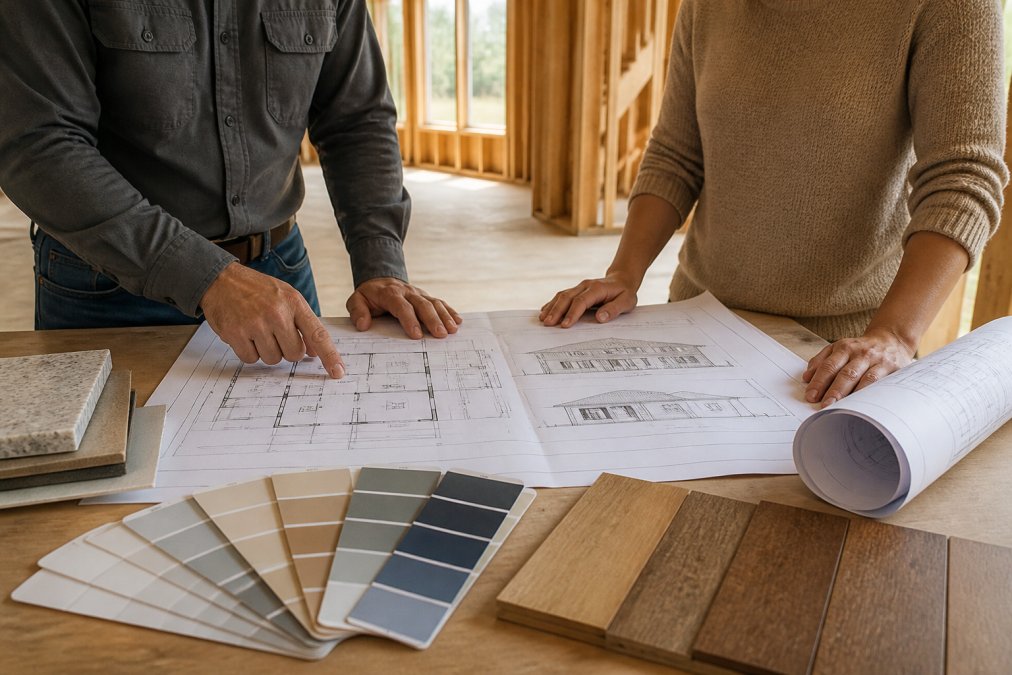
A homeowner reviewing blueprints at a kitchen table with a contractor and designer, both pointing at the plans and smiling in a bright, natural-light home setting
2. Design-Build vs. Design-Bid-Build: What's the Difference?
Design-build is a project delivery method where one entity handles both design and construction under a single contract (What Is Design-Build?). Design-bid-build splits those into separate contracts: you hire an architect, then bid the construction work out to the lowest responsive bidder.
That structural difference drives almost every other benefit. In design-bid-build, the designer has no incentive to consider what things actually cost to build. The builder, meanwhile, never sees the project until the drawings are locked.
The Design-Build Institute of America overview of delivery methods explains that design-build consolidates responsibility, which reduces the gaps where disputes and change orders breed.
Factor | Design-Build | Design-Bid-Build |
|---|---|---|
Contracts | One | Two or more |
Cost input | During design | After design |
Change order risk | Lower | Higher |
Schedule | Compressed | Sequential |
Accountability | Single source | Split |
3. How the Design-Build Process for Homeowners Actually Works
For homeowners, the design-build process follows a clear arc: discovery, design, pricing, construction, and closeout. You meet the team once, share your vision, and they carry it through every stage.
The design-build process for homeowners typically starts with a walkthrough of your home or lot. The designer asks how you actually live: where you cook, how you entertain, what frustrates you about the current space. That conversation shapes the blueprints more than any style quiz.
From there, the team produces concept drawings, then refined plans, then a fixed scope with pricing built in. You approve one package instead of juggling separate design fees and construction bids.
- Discovery and site walkthrough
- Concept design and budget alignment
- Detailed drawings and material selections
- Permitting and scheduling
- Construction with one project manager
- Final walkthrough and warranty
Because the builder sits in the design meetings, constructability gets checked early. That's how you avoid the classic "the drawings look great but this can't be built as drawn" surprise.
4. Faster Project Delivery: How the Design-Build Project Timeline Works
The design-build project timeline is shorter because design and construction overlap instead of running in a straight line. While drawings are being finalized, the team can order long-lead materials and pull permits.
In a traditional build, you wait for complete drawings, then bid, then wait again for a contractor's schedule to open. Each handoff adds weeks. Integrated teams compress those gaps by making decisions in the same room.
Schedule management improves for a second reason: fewer design revisions. When the person drawing the plan knows the crew's methods, details get resolved on paper rather than on site.
5. Design-Build Cost Control: How Early Decisions Save Money
Design-build cost control works by pricing decisions while they're still cheap to change. A cabinet layout costs nothing to adjust on a screen. It costs a fortune to move after the walls are up.
This is where early contractor involvement pays off. The builder flags expensive details during design, so you choose between options with real numbers attached. You're not approving a wish list and hoping the bid comes back affordable.
Cost certainty comes from that same early pricing. Instead of a rough estimate that balloons later, you get a scope and budget developed together. Competitive pricing still matters, but it happens through transparent line items rather than a low bid that hides extras.
Where does the money actually get saved?
- Fewer change orders from design gaps
- No redesign fees when budgets clash with drawings
- Reduced downtime waiting on decisions
- Material selections locked before price spikes
Owners who want budget control should ask for a line-item breakdown and a clear change-order process upfront. That single request separates organized teams from chaotic ones.
6. Reduced Risk, Fewer Change Orders, and Better Quality Control
Risk mitigation in integrated delivery comes from removing the blame gap. When one team owns design and construction, they can't point at the other party when a detail fails.
Change orders drop for a straightforward reason: the people who build the project helped design it. They catch conflicts, code issues, and material problems before construction starts. Fewer surprises means fewer costly amendments.
Quality control also tightens. The same company that set the standard is the one inspecting the work, so there's no argument about who's responsible for a crooked cabinet or a leaking flashing detail. Dispute reduction follows naturally.
That said, integrated delivery isn't right for every project. If you already have a trusted architect and a separate builder you love, forcing them under one roof may not fit. And on very small jobs, the coordination overhead may not be worth it.
7. How to Choose the Right Integrated Design and Build Team
Choosing a team comes down to qualifications, not the lowest number. Ask how long they've operated, whether they're licensed and insured, and who exactly will run your project day to day. According to the U.S. Federal Trade Commission's guidance on hiring contractors, you should verify licensing and get everything in writing before work begins.
Use a simple scoring approach:
- Licensed and insured, with proof provided
- Local references from projects completed in the last two years
- A named project manager, not a rotating cast
- Line-item pricing with a written change-order process
- Clear timeline with milestones
- Portfolio that matches your project type
A qualifications-based selection beats a pure price shootout. The cheapest bid often hides the change orders that show up later. Ask how the team measures cost certainty and schedule performance, and request examples of how they handled a problem mid-project.
Duralast Design Build is a family-owned, licensed home builder with more than two decades of experience and a team that handles both design and construction. We provide custom blueprints and guidance through every phase, from a kitchen refresh to a new roof to a full custom build. If you want a single team accountable for the whole job, that's exactly what we do.
Conclusion: Is Integrated Design and Build Right for Your Project?
Integrated design and build fits owners who want one accountable team, predictable budgets, and fewer surprises. It's less suited to projects where you already have separate trusted partners or where the scope is tiny.
The real test is simple: do you want to manage two companies and their arguments, or one team that owns the outcome? For most homeowners planning a major renovation or custom build, one team wins.
Duralast Design Build offers integrated design and construction, custom blueprints tailored to your vision, and licensed, insured craftsmanship backed by over 20 years of experience. Schedule now with Duralast Design Build and get your project moving with one team from first sketch to final walkthrough.
Frequently Asked Questions
What are the main benefits of integrated design and build services?
Integrated design and build services combine the designer and builder under one contract, which creates a single point of responsibility for your entire project. This setup speeds up the timeline because design and construction decisions happen together. It also controls costs by catching budget conflicts during the design phase rather than after construction starts. You get one team accountable for the final result, which reduces finger-pointing and keeps quality consistent from the first sketch to the final walkthrough.
What are the disadvantages of design-build compared to traditional design-bid-build?
The main trade-off is less direct control over individual design choices. In design-bid-build, you hire an architect first, then bid the construction separately, which can give you more say in every design detail. With design-build, you trade some of that granular control for speed, cost certainty, and a single point of contact. It also helps to check that the design-build team has in-house designers whose style matches your vision, since you are committing to one team rather than shopping each phase separately.
How does design-build cost control prevent budget overruns?
Design-build cost control works by pricing materials and labor during the design phase, not after. The builder reviews the design as it develops and flags items that push the budget, so you adjust before construction starts rather than paying for change orders later. Because the same team handles design and construction, there is no gap where a low bid turns into expensive revisions. This early cost certainty helps you make informed trade-offs, like choosing a different countertop to afford a larger island.
How long does a typical design-build project timeline run from start to finish?
Timelines vary by scope. A roof replacement or bathroom refresh usually moves faster than a full custom home, which involves permitting, site work, and multiple inspections. Integrated design and build compresses the schedule because design and construction overlap, eliminating the bid-and-rebid phase that adds weeks to traditional delivery. Your contractor should give you a written schedule with milestones for design sign-off, permitting, and construction phases so you know what to expect at each stage.